





A.I. – at what cost?
The fallout from Anthony Albanese’s announcement that AI data centres are ‘coming to town’ has raised nothing less than massive environment issues, let alone A.I.’s ongoing theft of intellectual property.
Greens environment spokeswoman Sarah Hanson-Young, who also chairs the inquiry into A.I. data centres, said: “Just because big tech companies want to move at hyper-speed doesn’t mean that we need to fast track and roll out the red carpet for them.”
UNSW professor and AI researcher Toby Walsh also told AAP: “We need to make sure these centres aren’t a drain on us and insist at a minimum on additional renewables.”
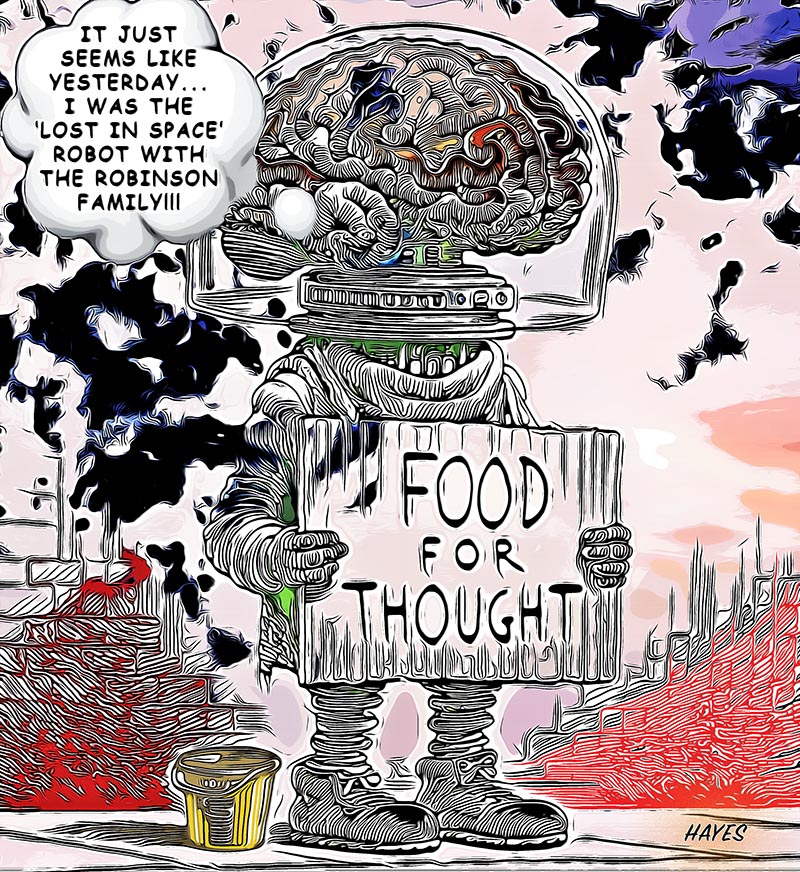
Just like the dot.com bubble burst in the nineties, will A.I. go out with a bang or just a mere whimper?
5 August 2026
ALAN HAYES
AMERICA now dominates A.I. with the most powerful systems and more data centres than any other nation. But that lead hasn’t come free of charge, and it’s now eroding quickly.
The lead is based on colossal spending on data centres, especially by Oracle, Alphabet, Microsoft, Amazon and Meta. A stumble by any one of them would ultimately spill over onto the world economy.
It’s estimated that these five U.S. companies combined will account for more than $800 billion in A.I. investments in 2026. They plan to spend an additional $1.2 trillion in 2027, but where is all this AI money coming from. Some from investors, but much of it is being borrowed.
And with the push for AI data centres in Australia, the same scenario will apply - borrow, borrow and borrow more money.
One worry, of course, is that their borrowing is quickly outpacing their profits. Not surprisingly, however, the U.S. bond market has begun to charge premiums for what it now considers a heightened risk - leaving what could be seen as the inevitable inability for the A.I. companies to be able repay their borrowings; just like the dot.com bubble burst in the nineties.
Oracle’s debt now stands just a bit above U.S. junk bond status. Amazon’s bond prices have also been hard hit. So, have those issued by SpaceX, which is also building A.I. data centres and whose bonds have been trading at junkish rates.
Meanwhile the Chinese AI companies are now offering A.I. that’s almost as good as that emerging from Anthropic and OpenAI — but Chinese companies are offering it free of charge to companies anywhere in the world, including in the United States.
This is likely to mean lower earnings for leading American A.I. corporations and less demand for data centres. A lesson that the Albanese Government should consider carefully before throwing open the flood gates in Australia. Why? Because the consequences are as clear as King Belshazzar seeing the mysterious writing on the wall that was interpreted by the biblical prophet Daniel.
So far this year, the share prices of four of the five big data-centre companies have trailed the overall S&P 500. Oracle’s shares have fallen more than 35 percent, while shares of SpaceX have fallen below their initial public offering price.
Even if A.I. is a bubble, it’s impossible to predict when it will burst. Maybe not for several years. And maybe not with a bang but with a whimper.
Why the public objection to A.I.?
The main objections to artificial intelligence span economic, ethical, social, and environmental domains. As these technologies integrate into daily life, critics have raised serious concerns about their long-term impact on human society.
The most immediate fear is massive job displacement. Unlike past automation waves that replaced physical labour, generative A.I. threatens white-collar professions. Writers, programmers, graphic designers, paralegals, and administrative staff face shrinking job markets. While proponents argue that A.I. will create new roles, the transition period could leave millions unemployed, widening the wealth gap between tech owners and the displaced workforce.
Additionally, over-reliance on A.I. leads to skill atrophy. As machines take over writing, analysing, and calculating, human critical thinking and problem-solving abilities could weaken.
But the problem goes beyond just human scrap-heaping, it could well easily become the rise of the machine. Why? Because A.I. development relies heavily on data scraping. Developers train large language and image models on vast amounts of copyrighted internet data. Authors, journalists, and artists argue this is systemic plagiarism, and rightly so. As a journalist and author of many best-selling books, I ask the question – “why should my intellectual property be stolen for the financial benefit of tech company parasites? Shouldn’t I receive royalties for the use of what I own?”
A.I. tools ingest their hard work without consent, compensation, or credit, and then generate competing content that undercuts the original creators.
Bias is another deeply rooted ethical problem. A.I. systems learn from existing human data, which inherently contains historical prejudices. When used in high-stakes fields like hiring, bank lending, or criminal justice, A.I. algorithms often replicate or amplify these biases. This creates a facade of "mathematical objectivity" that masks systemic discrimination.
In our modern society, people are becoming less trustworthy of what technology may offer, in particular when it concentrates wealth in the hands of a select few and unnecessary information in the hands of government. It brings into play the realisation and fear of a ‘Big Brother’ dystopian society.
More and more we are seeing the ugly side of A.I., where no one is safe from the rise of deep-fakes and generative text that threatens the shared truth necessary for a functioning society. A.I. tools can create highly convincing, entirely fabricated videos, audio recordings, and news articles in seconds. This makes it incredibly easy for bad actors to launch automated scam campaigns, manipulate financial markets, and spread political propaganda. As a result, public trust in digital media, journalism, and democratic institutions is eroding apace.
Artists and creators need guarantees that tech companies cannot use local creative works and data without consent or fair pay, which is currently not happening.
The environmental impact and cost
There’s little doubt that the physical cost of infrastructure required just to maintain A.I. is causing enormous environmental impact and damage. Just training and running large data centres demands massive amounts of electricity, which is heavily increasing carbon emissions and causing an unacceptable impact on the health of the environment that sustains us – global warming may well accelerate beyond a reversible level.
Let’s not forget that A.I. centres require millions of litres of fresh water daily just to cool their servers, placing a dangerous strain on local water supplies. In a country, such as Australia, which knows only too well the hardship and impact of drought and long periods of little or no rainfall, building A.I. data centres may well cause a climate catastrophe.
Critics and the Australian Greens argue the government should pause A.I. data centre approvals to prevent strain on power and water grids, protect local communities from noise and pollution, and stop copyright infringement before mandatory national standards are legislated. But is that enough? Or should we just put the boot into the A.I. backside from the get-go and ignore the shallow promises of wealth to our nation, which the Albanese Government seems to have been smitten by. What is now happening in the U.S. should be the gauge to say NO!
Let’s not also forget that A.I. data centres, because of their insatiable appetite for electricity, threatens to drive up power prices and slow down the national transition to clean energy. And when the grid goes dark, what happens then? Backup diesel generators are used to ensure 24/7 reliability, which are a significant source of unregulated air pollutants near communities.
And what about the noise pollution and rapid land development with little consultation or public benefit, as seen in other countries? A.I. promises a minus not a plus.
A dystopian scenario?
A.I. guarantees no more than power concentration. The immense cost of building and maintaining cutting-edge A.I. means only a few mega-corporations control these powerful tools. This gives a handful of tech executives unprecedented influence over public discourse, information access, and economic infrastructure, operating largely without government regulation or democratic oversight.
Yet one issue will always persist - the billionaire grab to control and own everything, consumed with insatiable greed and avarice at the expense of society and the environment.
But hidden in the shadows of the A.I. boom is the sobering reality that business and consumer demand suddenly shrinks, and it’s then that investors and creditors are left holding worthless pieces of paper. Then, the private dystopian dream dissolves as the competence of government policy makers becomes highly questionable, and trust in government is even lower than what it is today.



.jpg?crc=4257584689)


_web.jpg?crc=282450513)


SUBSCRIBE FOR FREE to the Grapevine News Online and to the monthly e-book edition of the Grapevine Community Weekly. Our online news platform and monthly newspaper is about real local news and events. We will not spam you or share your details with third parties.
