






Oil is flowing again, but at what price?
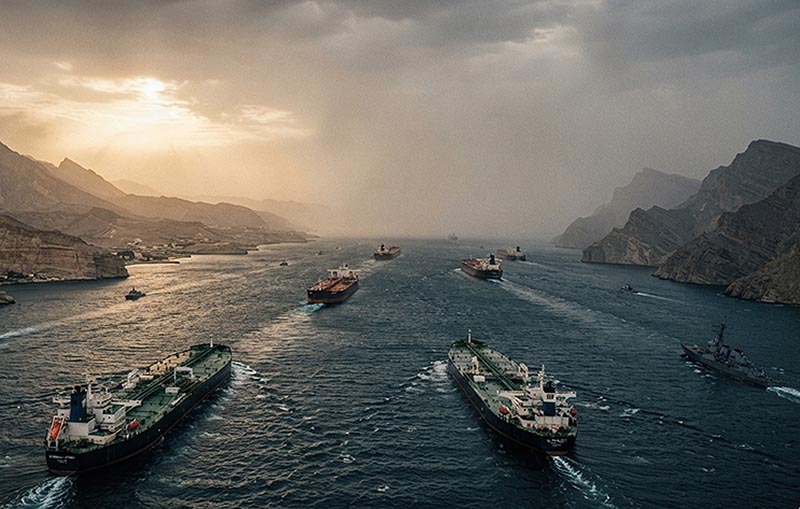
Mad King Donald’s. war with Iran has revealed the full extent of the power Iran possesses to hold the global economy to ransom by closing the Strait of Hormuz. For months, despite the world witnessing the full extent of the ‘lunatic in the White House’s’ fantasies and outright lies, America’s struggle to reopen it up again was to little avail. Yet, despite Trump’s ongoing failure to negotiate a peace with Iran, in September the oil began to flow again!
Oil data figures for September shows more oil is flowing from the Middle East than at any point since the start of the war — and most of it is coming through the Strait of Hormuz. But don’t expect to see much, if any, relief at the service station pump anytime soon.
7 October 2026
ALAN HAYES
BEFORE Mad King Donald’s war, some 19 million barrels of crude oil were exported from the Middle East every day. That number slowed to a trickle after Iran closed the Strait of Hormuz, the main route through which this oil travelled. The result was a crippling global energy crisis felt as far away as the Philippines and, of course, Australia.
But last month, according to Kpler, a firm that tracks oil tankers, the numbers climbed back up to an average of 16 million barrels a day — not back to pre-war levels, but not so far off either. Some 6 million barrels of that oil is coming through land pipelines and ports on the Red Sea or the Gulf of Oman that bypass the Strait of Hormuz. But 10 million barrels are making it through the Strait of Hormuz itself.
So, how did this happen? The Iran war has in many ways become the story of Iran closing the strait, and the U.S. trying to reopen it — and so is the fact that oil is moving again, which feels like a big deal. And in some ways, it is.
But that doesn’t mean that the price of oil a barrel is going down any time soon. And it doesn’t mean the Mad King is on the verge of winning the war either. It could even make Iran more dangerous.
But the fact is that oil is flowing again!
My colleague, who lives in California, told me during a telephone conversation we had over the weekend, that Americans are concerned that Iran is still attacking ships in the Strait of Hormuz almost every day. But, regardless, the oil is making it out simply because more tankers are now willing to take the risk of trying to cross the no-go zone.
It went on to tell me, according to his sources, that a combination of two things is helping to explain why oil is flowing again.
For some time, the U.S. military has been offering air protection to tankers willing to take their chances through the strait. Initially, there were few takers.
But as the war has dragged on, countries like Saudi Arabia and the United Arab Emirates have become increasingly desperate to get their oil out. They’re now offering huge amounts of money — ten times more than pre-war fees in some cases — to tanker operators. Enough that many are now saying yes.
The upshot is that oil is flowing again, but at a huge cost. Yet despite the oil now getting through, Iran still has leverage.
Even though every barrel of oil that leaves the Middle East in theory reduces Iran’s ability to inflict pain, reports suggest that the Islamic republic is eager to end the war. And this comes at a time when Iran itself is hurting. It’s been under years of sanctions and months of war, and its own seaborne oil exports have now been reduced to zero by the U.S. blockade, the same Kpler report shows, leaving its economy weaker than ever.
Many interpreted Iran’s proposal to the U.S. last month — a seven-day plan to cease hostilities, reopen the Strait of Hormuz and then begin comprehensive talks on its nuclear program — as a sign that the Islamic Republic was eager to end the war. Unsurprisingly, Mad King Donald rejected the plan outright, which could be read as a sign that he thinks he is gaining the upper hand.
But the resources the U.S. has dedicated to increasing oil flows out of the Middle East — which involve fighter jets and missile systems with drone interceptors — are not sustainable in the long-term, an analyst told my friend.
The recent increase in oil flows has also done almost nothing so far to bring down oil prices. Those high tanker operator fees, along with higher insurance premiums, have driven up the cost of shipping. And there’s still not enough oil to meet demand around the world. China and other countries are still drawing down the energy reserves that helped stabilise prices earlier in the conflict. So, in that sense, Iran’s grip on the strait may be loosening, but its overall strategy — to keep oil prices high enough that the world, and particularly the U.S., feels it — is still working. And should that start to change, Iran still has other cards to play.
Iran’s allies, the Houthis in Yemen, still have control over the Bab al-Mandab Strait on the Red Sea, another crucial oil route. And Iran could, if it felt under enough pressure, begin targeting oil at the source, by bombing energy infrastructure in the Gulf again.
The problem for the world is that Iranians see the conflict with the U.S. as a battle of endurance. They could escalate the conflict if the oil price were to fall or if they believe the Americans will attack again. Escalation is the primary leverage they have over the U.S., and for that matter the world.
The Strait of Hormuz is just one piece of that leverage.



.jpg?crc=4257584689)


_web.jpg?crc=282450513)


SUBSCRIBE FOR FREE to the Grapevine News Online and to the monthly e-book edition of the Grapevine Community Weekly. Our online news platform and monthly newspaper is about real local news and events. We will not spam you or share your details with third parties.
