





Real pollution cuts, not accounting tricks
Last Thursday (1 September 2026), the Greens announced that they will support an Improved Native Forest Management (INFM) method following negotiations with the federal government.
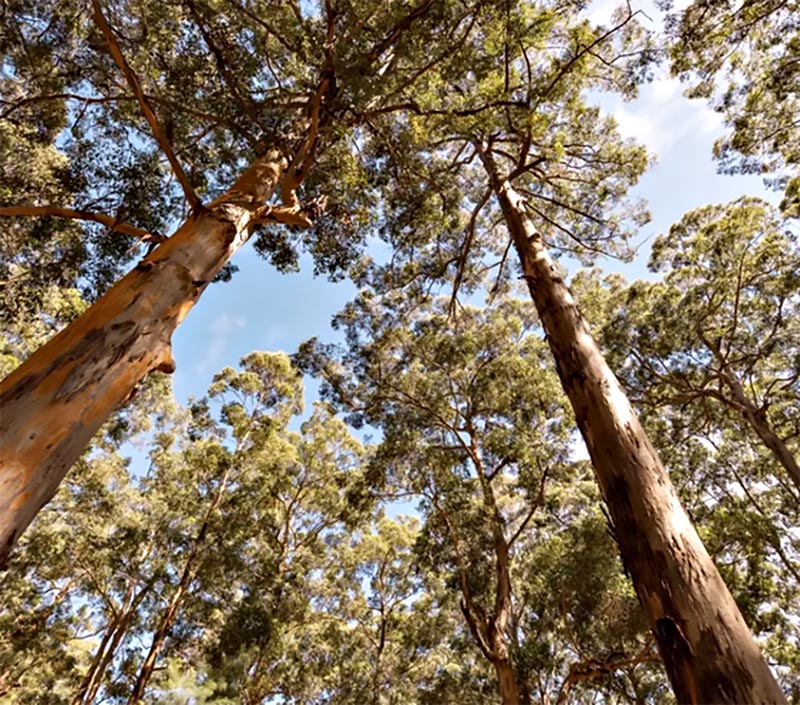
The improved INFM is an Australian carbon crediting policy that allows state governments to earn Australian Carbon Credit Units (ACCUs) by stopping or reducing commercial timber harvesting in public native forests.
16 September 2026
FOLLOWING on from theINFM announcement, the Greens said they will oppose Labor's Carbon Credits and Other Legislation Amendment (Integrity and Transparency) Bill and will move to disallow the upcoming Integrated Farm and Land Management (IFLM) ACCU scheme.
This has come about because Labor refuses to take genuine climate action, continues to take money from fossil fuel giants, and has opened 37 coal and gas projects since entering office.
It was after careful consideration of complex legislation and meaningful discussion across their party that the Greens have now been able to negotiate new protections for native forests that permanently reduce logging and immediately protect forests.
There is now a mechanism in legislation that will significantly reduce logging, a legal precedent to stop coal and gas using offsets, and assurance that native forests can’t be reclassified as plantations.
A first legal precedent against coal and gas using offsets to avoid emissions reduction:
The federal government will reflect in law any promise by a state government that coal and gas cannot access credits created by the scheme. This is the first legal precedent targeting fossil fuel emitters and rightfully treating them differently under the Safeguard Mechanism.
A requirement to reduce logging permanently:
ntire surrounding Regional Forest Agreement would have to permanently reduce logging volumes by 20%. The Greens have secured an increase in this baseline to reduce logging by 25% in 2028 and 30% for projects registered after 2030. These changes will protect more forest, likely bring forward new national parks, and expedite the end of native forest logging.
Fix the definition of plantation loophole:
The Greens secured changes to the definition of ‘plantation’ to exclude seeding, and lock in classifications of the native forest estate as at the 2023 State of the Forest Report. This will stop state governments from reclassifying seeded regrowth native forest (including ~600,000 hectares of aerially reseeded Tasmanian forests) as plantations to avoid protections under the INFM.
The fight ahead
The Greens confirmed that they will oppose a much larger carbon credit bill and associated methodology, kickstarting the fight against Labor’s climate accounting tricks by opposing Labor’s Carbon Credits (Integrity and Transparency) Bill and moving to disallow the IFLM method.
The combined impact of these two oppositions will wipe out around 40% of the current Australian Carbon Credit Unit (ACCU) market over the coming years and stop the re-making of dodgy offset methods.
This will have the effect of significantly increasing the price big corporations can pay to avoid emissions reduction, and will incentivise urgent and genuine emissions reduction instead of the widespread greenwashing enabled by the current state of the ACCU market.
The opposition to this scheme is critical to ensuring that coal and gas no longer get a free ride, ahead of the forthcoming review of offsets under the Safeguard Mechanism.
Senator Larissa Waters, Leader of the Australian Greens said, “After achieving the first ban on coal and gas federally using offsets, the Greens are launching a fight to stop coal and gas from ever getting a free ride on pollution reduction again.
“The fight against Labor’s carbon credit greenwashing starts with the Greens opposing 40% of the offsets used by these big polluters to hide their emissions.
“For years, Labor has created a system that allows big polluters to buy get-out-of-jail-free cards instead of cutting their emissions, and the consequences of this broken system are being felt around the country by communities living with the floods, fires and heatwaves. That ends now.
“The Greens and the environment movement are united in caring deeply about protecting native forests, stopping extinctions and cutting the pollution driving the climate crisis.
“But let’s be honest about who we are negotiating with here, a Labor government that has approved 37 coal and gas projects since coming to office.
“Time and again, they have shown they will not act in good faith when it comes to protecting nature, our environment or acting on climate change.
“The Greens demand real pollution cuts to protect our climate, not accounting tricks.
“After careful consideration of complex regulation, the Greens have secured important new protections for native forests, including a legal precedent to stop coal and gas using offsets, significantly reduce logging, and immediately protect forests. The Greens party room has resolved to support the improved INFM because forest and habitat is critical to prevent endangered species from extinction as well as the climate.
“However, we do not support Labor’s system of accounting tricks instead of pollution reduction, which is why we also announce today that we will move to significantly increase the cost of polluting by opposing 40% of the carbon credit market.
"A 40% contraction in the offset market means the remaining credits will become much more expensive. It will become more expensive for polluters to buy their way out of the rules, so coal and gas will have to actually reduce their emissions.
"The free ride for big polluters is over. No more propping up their profit margins, while the climate keeps cooking and people and animals die because of corporate greed."
The way ahead on gas
With fossil fuel on the agenda, the Greens has reiterated their call for a minimum 25 per cent gas export tax, following the expected first back-down of Labor’s reservation legislation from a strict 20 per cent reservation.
They will examine the exposure draft in detail, but say Labor should abandon its proposed reservation scheme and instead impose a gas export tax that would, according to former Treasury Secretary Ken Henry, deliver the same objectives.
A 25% gas export tax would raise $17 billion a year in revenue that could fund cost-of-living and energy bill relief, while accelerating the transition away from Australia’s dependence on volatile gas.
Australian Greens spokesperson for Resources, Senator Steph Hodgins-May, said, “When gas corporations say jump, Labor asks how high. Now the 20 per cent reservation requirement is being watered down to appease the gas industry.
“A gas export tax does what Labor claims its reservation scheme will do, but it also raises revenue to compensate Australians who have seen gas prices triple since exports started a decade ago.
“A reservation scheme won’t raise a cent for Australian households. And Labor is designing it in close consultation with the very gas industry that has spent years fighting any policy that asks them to pay their fair share.
“We’ve been clear that a reservation scheme is a distraction from growing public support for a gas export tax, and it serves no one but the gas lobby.
“Labor should drop this pathetic capitulation to the gas industry and work with us to finally make sure Australians get a fair return from our gas.
“Labor needs to stop choosing the gas industry over Australian households. If the growing demand for a fair return on our gas isn’t enough to convince them, what will it take?”
Testimony from Dr Ken Henry at gas export tax inquiry:
“...you can design an export tax in such a way that it has exactly the same impact on the proportion of gas that is supplied domestically as against the proportion that's exported… But there's one big difference, and it's a really big difference: the gas reservation doesn't raise revenue.
"So, why the hell would you do that? It just doesn't make sense. It's much more sensible to achieve the same goal—that is, lower price for domestic gas and more secure supply of domestic gas—through an export tax than through a gas reservation policy.”



.jpg?crc=4257584689)


_web.jpg?crc=282450513)


SUBSCRIBE FOR FREE to the Grapevine News Online and to the monthly e-book edition of the Grapevine Community Weekly. Our online news platform and monthly newspaper is about real local news and events. We will not spam you or share your details with third parties.
