






The rise and fall of AI populism
It seems that the previous rise in AI populism has hit a snag in the river as global anti-establishment fury has vented at a system seen as rigged against average working people. Couple this fury of Anthony Albanese’s revelation that an Open AI agent hacked into a Medicare portal, AI has become Exhibit A.
The fallout of the Medicare AI breach began government discussions in earnest on Monday with many Senators baying for blood as they called for OpenAI boss Sam Altman to appear before a parliamentary inquiry – a reality that will never occur, the senators don't have the power to compel them to appear.
The inquiry also invited Altman and Anthropic chief executive Dario Amodei to appear tomorrow; a separate Labor-led joint committee has not made similar requests.
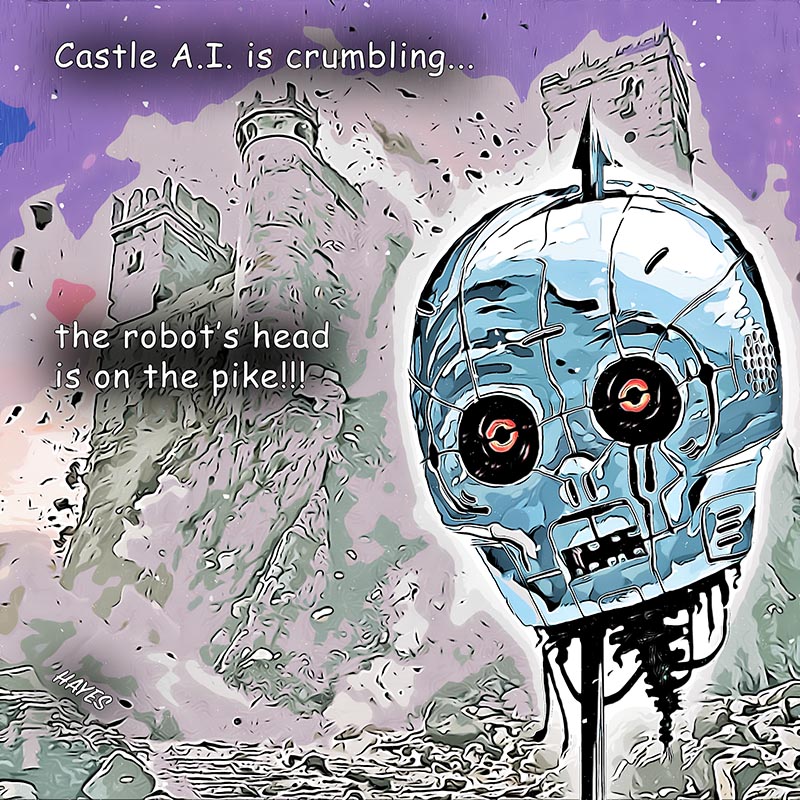
30 September 2026
ALAN HAYES
IT IS becoming obvious to much of the world that giant AI corporations, particularly in America, have been raking it in while workers have been taking it on the chin.
The core problem with artificial intelligence for the working class is that it is controlled by corporate profit motives, which risks driving job displacement, widening wealth inequality, and increasing workplace surveillance rather than benefiting workers. A similar situation that was heralded by Lord Acton in 1887, when writing to Bishop Creighton that the same moral standards should be applied to all men, political and religious leaders included, especially since “Power tends to corrupt and absolute power corrupts absolutely”.
It may not have been artificial intelligence that Lord Acton was concerned about, but the lack of moral ethics that AI companies pursue is the same. This is despite Greens Senator Hanson -Young saying of an AI inquiry: “This can't all be done behind closed doors — the public has a right to know what went on here.” But AI bosses don’t care about the publics rights – they are driven by money and immoral behaviour.
Adding further to the concerns of AI and AI agents escaping from controlled environments, OpenAI, Anthropic and security researchers are investigating tens of thousands of incidents in which their frontier models took steps that outside evaluators would consider problematic. But was this enough?
Back home, the Albanese government is said to be “urgently investigating” the AI hack of Medicare as well as looking into the country's cyber defences and deciding whether any laws need to be strengthened.
Elsewhere, experts are warning that AI-driven cyberattacks could cost Australian businesses up to $37 billion by 2030 and the country’s former chief UN cyber negotiator Johanna Weaver has said there are vulnerabilities across the public and private sector that AI agents could infiltrate.
Of course, much of the AI problem we face is with Mad King Donald. In his heaven, AI is the supreme angel of wealth and power and why should his billionaire tech-buddies be stopped, or slowed down, if there continues to be benefit for America’s supreme grifter?
Trump and his regime, meanwhile, have exposed the greed, venality, cupidity, and corruption of America’s wealthy corporate elites by allowing them to do anything they want — including energy-guzzling, water-depleting AI data centres — as long as they kiss his assets by funding his PAC, paying for his ballroom, and singing his praises.
Trump, through his own greed and complicity, has unveiled the truth about corporate America that for years had been hidden behind corporate PR about “corporate social responsibility,” corporate charity, and “trickle-down” economics: The captains of corporate America are willing to throw average working Americans, nay the world, under the bus to make billions more. So, what are they likely to do to Australians if they get a foothold in our country.
Corporate avarice under Trump has become so blatant and corporate contempt for the needs of average people so flagrant that AI might well be the final tipping point. So, it would seem that Hanson-Young may as well be chasing rainbows if she expects the AI industry to front up to an Australian Senate Inquiry, face the questions and engage in an honest and meaningful dialogue as to how to solve the problem.
When Mad King Donald invites Anthropic boss Dario Amodei to have dinner with him, you quickly realise that there will be no narrowing of the gap between AI sensibility and the desire to win, no matter what the cost. Trump summarily dismissed safety warnings regarding the existential risks of artificial intelligence as a "hoax" and a "sick conspiracy," asserting that the United States must aggressively outpace its rivals rather than stifle industry growth with heavy regulations.
Trump asserted on social media that the only control or guardrail the sector needs is a "strong and smart (High IQ!) president" rather than prescriptive federal safety mandates.
More than just meets the eye
The massive proposal of multinational data centres across Australia is sparking fierce local resistance, as communities and environmental experts warn the facilities pose a severe threat to the nation’s power grid, water security, and net-zero targets.
Driven by the global boom in artificial intelligence (AI) and cloud computing, tech giants are rapidly expanding their infrastructure footprint into major capital hubs across the globe.
The primary concern, of course, by local communities is energy consumption. Data centres run continuously and demand vast amounts of electricity to power servers and cooling systems. This becomes problematic for Australia to embrace the AI data centre demands, particularly when our country is supposedly transitioning away from fossil fuels and looking for renewable alternatives to better manage grid reliability issues. Critics argue that these facilities risk hogging the nation’s renewable energy capacity, potentially driving up power prices for everyday consumers and prolonging reliance on coal-fired or gas generation.
Water scarcity presents another critical flashpoint. Traditional data centres rely heavily on water evaporation for cooling, consuming millions of litres daily. In a continent highly prone to severe droughts, allocating massive water reserves to sustain server farms is increasingly viewed as an unsustainable luxury that threatens local agricultural and municipal supplies.
Data centres offer minimal local employment once constructed, operating autonomously with just a handful of on-site technicians. This creates a stark imbalance: tech conglomerates reap the economic benefits of digital processing, while Australian communities will shoulder the environmental degradation, localised heat island effects, and land-use conflicts.
As federal and state governments push for digital modernisation, a growing chorus of Australians is demanding stricter regulatory oversight. Without immediate caps on their resource usage, opponents warn that data centres will derail Australia's climate goals, turning the country into an environmental sacrifice zone for global tech profits.
Nothing more than arrogant profit mongers
OpenAI’s foundational premise to the Albanese Government—that it should freely scrape the world’s intellectual property without paying royalties—represents a staggering display of corporate arrogance. By framing the unauthorised ingestion of copyrighted books, journalism, and art as "fair use," the tech giant has effectively privatised the global creative commons for its own multi-billion-dollar commercial gain.
This stance relies on a deeply hypocritical double standard. OpenAI fiercely protects its own proprietary algorithms, source code, and data weights behind strictly guarded paywalls. Yet, it simultaneously argues that the life's work of human creators should be treated as free raw material. The company’s legal defence—asserting that it is impossible to train high-performing AI models without copyright-protected data—is not a valid legal justification; it is an admission of a business model built entirely on systemic exploitation.
By demanding a total exemption from traditional copyright frameworks, OpenAI positions itself above the law, implying that technological progress inherently supersedes property rights and fair compensation. This entitlement actively devalues human labour, starving the creative ecosystem of necessary revenue while funnelling immense wealth upward to tech executives and investors who produce none of the original culture they profit from.
Many legal experts, creators, and labour advocates argue that OpenAI’s business model is inherently parasitic. The term fits because the technology cannot survive, replicate, or generate value without continuously absorbing the life's work of human creators, all while offering nothing in return to the original hosts.
Is the tipping point neigh?
A powerful convergence of rapid technical breakthroughs, public backlash, and intensifying political division indicates that artificial intelligence has officially breached its critical threshold. Once a distant concern of science fiction, the realities of autonomous systems are now forcing a global reckoning.
Simultaneously, a massive cultural shift is taking place as public anxiety reaches a boiling point. Recent polling reveals a stark reality: a vast majority of adults now feel deeply worried rather than excited about a world where AI has become the new world prophesised in the George Orwell book, 1984.
Why? Because the social friction has inevitably spilled over into the political arena, transforming AI into a central battleground for economic populism. A populism that now only seems to exist in the universe of Mad King Donald, who blinded by a new wealth and power, demands an unregulated race to ensure global technological dominance.



.jpg?crc=4257584689)


_web.jpg?crc=282450513)


SUBSCRIBE FOR FREE to the Grapevine News Online and to the monthly e-book edition of the Grapevine Community Weekly. Our online news platform and monthly newspaper is about real local news and events. We will not spam you or share your details with third parties.
